Start with visible condition
The body, lamps, glass, doors and cabin are checked for visible issues before loading. The record shows the condition at the final handover point.
Check the functions that matter
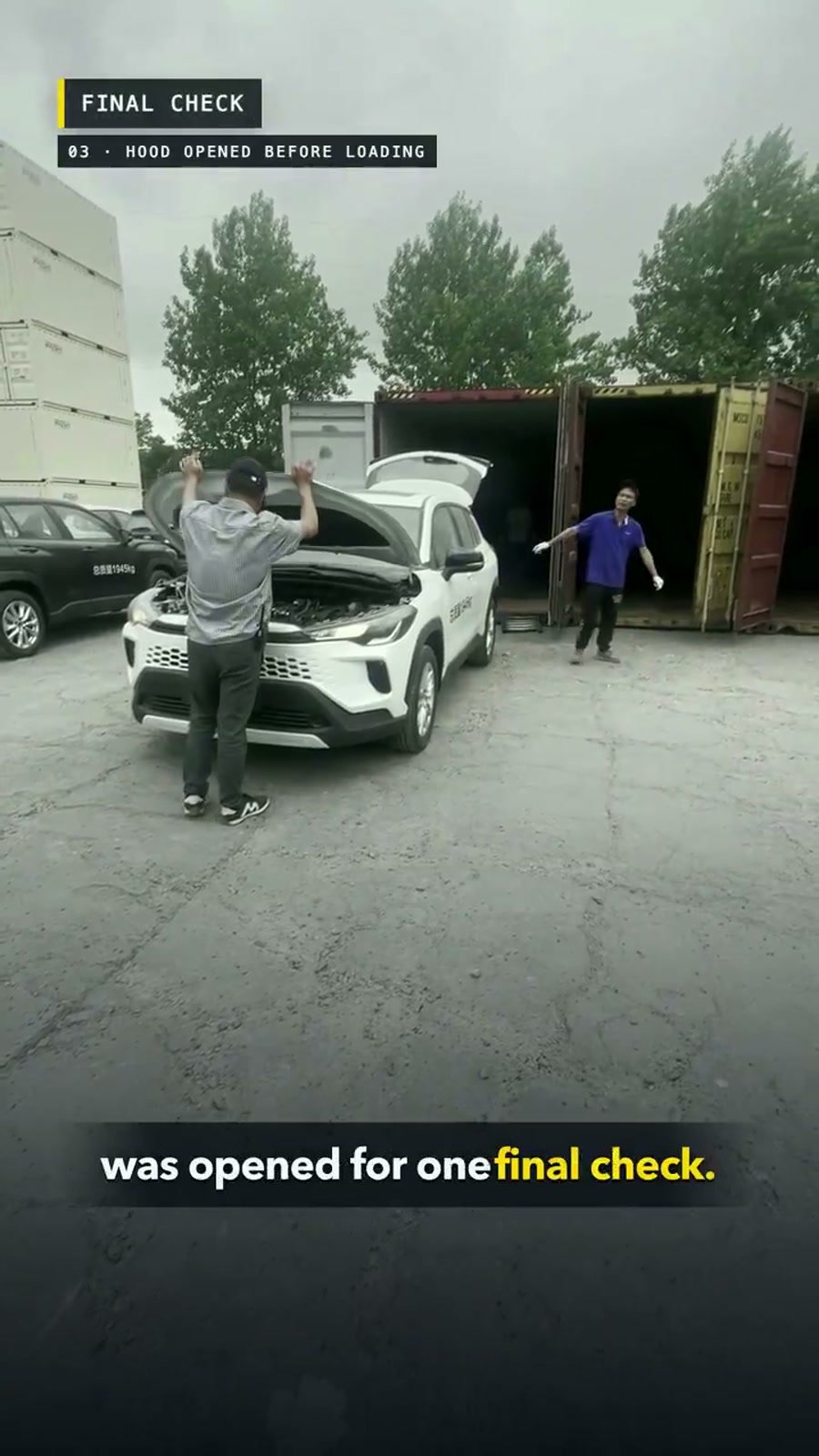
Key operating functions are confirmed before the vehicle is moved into the container. The final check includes the areas that will be difficult to access after loading.
Evidence protects both sides
Photos and video help distinguish a pre-existing issue from transport damage. Importers should know what was checked and what evidence will travel with the shipment record.
What a pre-loading inspection should cover
The checklist should match the vehicle and agreed service scope. For this Corolla Cross record, the review covered visible body and paint condition, tires and wheels, the interior, lights and electrical systems, and basic operating condition. Used vehicles require a more detailed condition report because wear, repairs and prior use must be documented separately.
How loading evidence protects the buyer
Record the vehicle before it enters the container, the final check at the loading area, its position inside and the secured result before the doors close. Where appropriate, connect the record privately to the vehicle identification details. This creates a clearer baseline for distinguishing a pre-loading condition issue from possible transport damage after arrival.